Senior Dogs & Mobility

Life with an older dog

Practical ideas, carefully chosen products and honest guidance for the later years — for dogs who’ve slowed down, and the people looking after them.

This section shares general information and our own experience. It isn’t veterinary advice and can’t diagnose anything. If your dog’s mobility changes, please talk to your vet.

An older black dog with a grey muzzle resting on a sofa
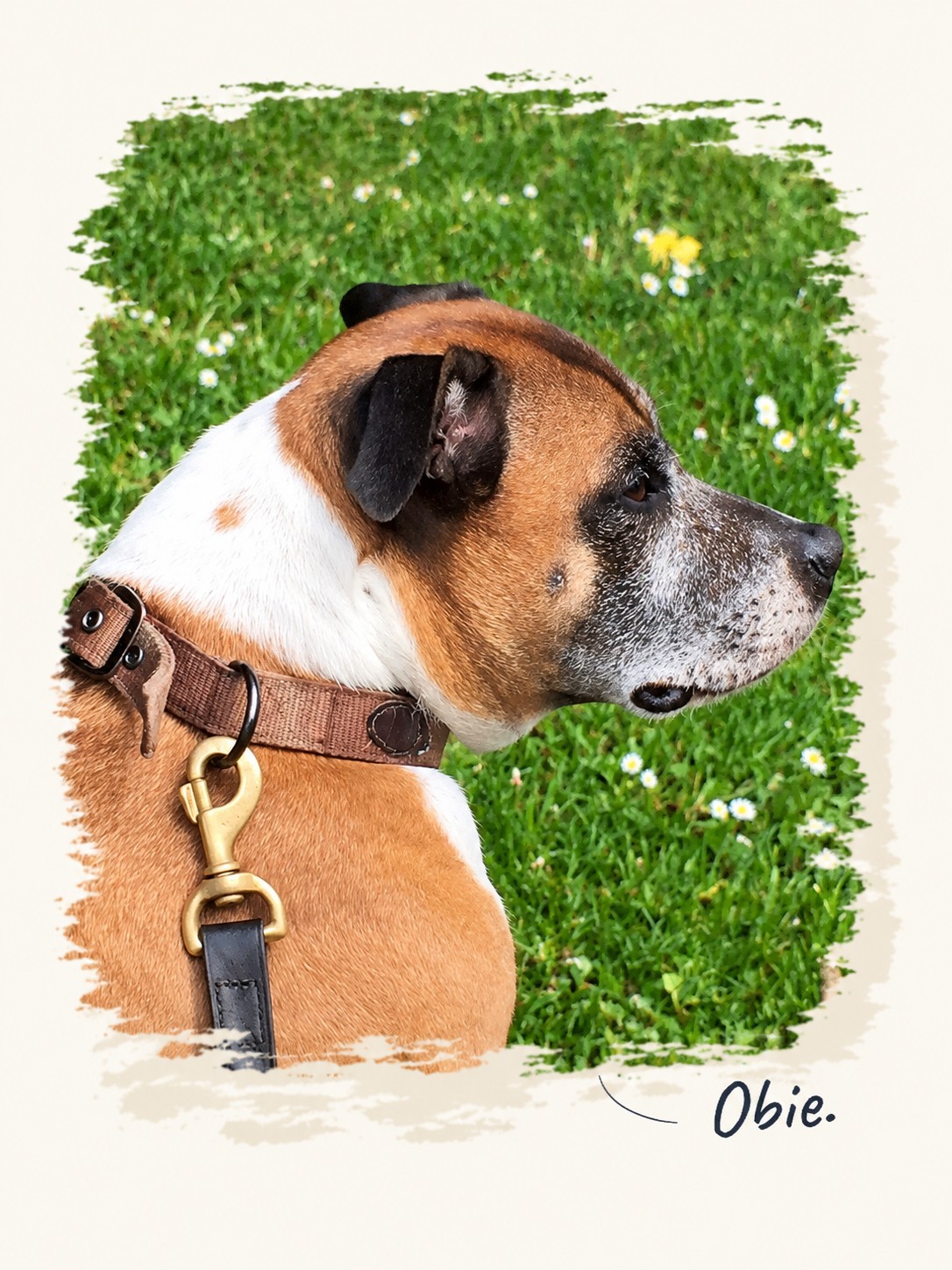
Obie in profile on a daisy-covered lawn, wearing a brown collar and lead, with his name handwritten below

From our own experience

Why this section exists

Our Staffy, Obie, was with us for 17 years and went through a lot — surgery on a luxating patella, cruciate ligament damage after chasing a football, and more. His hearing began to fade at around 13, and at around 14 he had his first stroke, confirmed by our vet. After a stroke he lost the use of his back legs.

With a wheelchair, physiotherapy, hydrotherapy and plenty of determination, he learned to walk — and even run — again. As he grew older, steps to the bed and sofa, non-slip mats and raised bowls helped him stay comfortable and independent.

It’s our story, not a treatment plan. Every dog is different, and your vet is the right person to guide your own dog’s care.

Read Obie’s story
01

Around the home

Small changes to the places your dog uses every day can make them easier to get around.

A Labrador sitting in a living room with rugs on the floor
  • Grip and flooring

    Hard, shiny floors can be tricky for a dog whose legs are less steady. Many owners lay non-slip rugs or runners along the routes their dog uses most — from bed to water bowl to the back door.

  • Ramps and steps

    A ramp or set of steps lets a dog reach a sofa or bed without jumping. Check the maker’s stated weight limit, the length (longer means a gentler slope), the surface grip and whether it folds away. Most dogs need time and encouragement to use one.

  • Beds and resting

    A bed with a low edge is easier to step into, and a supportive base can be easier to get up from than something very soft. Put the bed somewhere warm, quiet and free of draughts.

02

Out and about

Walks and trips don’t have to stop — they often just need to change shape.

A golden retriever wearing a harness, lying among autumn leaves
  • Harnesses and support

    A well-fitted harness with a handle lets you give a little help on steps or getting up, without pulling on the neck. Your vet or a veterinary physiotherapist can suggest which kind of support suits your dog.

  • Adapting walks

    Ask your vet how much exercise is right now. Many owners swap one long walk for shorter, gentler ones, and let an older dog take time to sniff — which is enjoyable in itself.

  • Travel and the car

    A ramp or step for the boot, a non-slip mat and familiar bedding can all help. Plan regular breaks. The Highway Code asks that dogs are suitably restrained in vehicles, so they can’t distract you or be hurt if you stop quickly.

Source: The Highway Code, rule 57.

03

Mobility & rehabilitation

Aids and therapies are decisions to make with your vet, who knows your dog’s history.

A small dog using a wheelchair on the grass
A stock photograph — not Obie. We don’t have a picture of him in his wheelchair to share.
  • Wheelchairs and carts

    A dog wheelchair supports the back or front of the body so a dog can keep moving. They’re usually made or adjusted to fit the individual dog. Please get advice from your vet or a veterinary physiotherapist about whether one is suitable and how to introduce it.

  • Physiotherapy and hydrotherapy

    These are usually arranged through a referral from your vet. For Obie, both were part of getting back on his feet after he lost the use of his back legs — but what’s right for one dog may not be right for another.

  • Quality of life

    Comfort, company, routine and things to enjoy all matter. Your vet can help you think through your dog’s quality of life as they get older, especially if things change quickly.

04

Comfort

The quiet, everyday things: where they sleep, how they eat, and staying warm and dry.

An older yellow Labrador lying on a rug in a living room
  • Washable everything

    Covers that come off and go in the machine matter more than ever with an older dog. Wipe-clean mattresses and washable fleece bedding make accidents much less of an event.

  • Bowls at a comfortable height

    Raised bowls helped Obie as he got older. They don’t suit every dog, so ask your vet whether a raised bowl is a good idea for yours, and at what height.

  • Warm, dry and seen

    A drying coat after a wet walk, a warm spot away from draughts and a small light on the collar for dark evenings are simple things that make winter easier.

05

Questions to take to your vet

Useful for a check-up when you’ve noticed your dog slowing down. Write down what you’ve seen at home first — when it happens, and how often.

  1. Is this slowing down part of normal ageing, or could something be treated?
  2. What kind of exercise, and how much, suits my dog now?
  3. Would a ramp, harness or other aid help — and which kind?
  4. What signs of pain or discomfort should I look out for?
  5. Is my dog a comfortable weight for their age and build?
  6. Would physiotherapy or hydrotherapy be worth considering?
  7. How often should we come in for check-ups from now on?

06 · The collection

Older Dogs finds

View all 23 Older Dogs finds

Some links on Unique Dog Finds are affiliate links. If you buy through one of these links, we may earn a commission at no extra cost to you. Sponsored content and paid partnerships will always be clearly labelled. How we’re funded.

Guides

Guides for older dogs

Our promise

No fake reviews. No invented stars. No “buy now”.

  • Researched, not “tested”We check every detail with the maker or retailer. We only say we’ve used something when we have.
  • Dated pricesEvery price shows the day we last checked it.
  • You buy from the makerWe don’t sell anything or take payments.
  • Never chosen for commissionHow we choose · How we’re funded